

Website last updated: 7-5-2026
Home
Book & Film reviews
Competitions
Event
FSWL Merchandise
In Memoriam
Interviews
James Bond 007 collection
James Bond 007 films
James Bond 007 games
James Bond 007 literature
James Bond 007 news
James Bond 007 products
James Bond 007 shop
James Bond 007 stars
James Bond Fan Clubs
Swedes in the Bond films
Luxurious environments and international travel define agent 007
By: Anders Frejdh
Published:
2026-02-13
2026-02-13
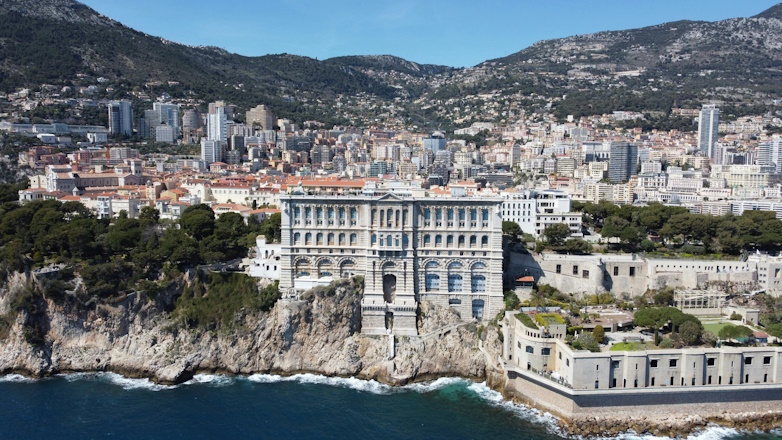
This escapism is a fundamental part of the appeal and has remained consistent over the decades. For many fans, Bond represents a gateway to a world of elegance, where the opportunity to visit a casino, or check into a five-star hotel on the Riviera, is part of everyday life. It is this mix of danger and flair that creates the unique atmosphere that has become the series’ signature. By placing the action in these settings, a clear contrast is established between the brutal reality of Bond’s profession and the polished surface of the international elite.
It is obvious that the settings are more than just backdrops; they are an integral part of the narrative, signalling status and stake. Whether it is a car chase through the ancient streets of Rome or a quiet conversation on a private Caribbean island, the surroundings reinforce the sense that the stakes are global. This strategy has proven to be timeless, and even as the world changes, the fascination remains with the boundless existence that James Bond represents.
The richness of detail in Ian Fleming’s descriptions of European destinations
Ian Fleming was not just a writer of spy novels; he was fundamentally a journalist with a deep passion for travel and culture. In his books, he painstakingly described the places with an almost documentary precision. When Fleming wrote about a dinner at a restaurant in Paris, or a train journey through Europe, it was with a richness of detail that made the reader feel the smells and tastes. He understood that to make the fantastic plots believable, the world they took place in needed to feel real and tangible.
This love of continental Europe and exotic places like Jamaica, where he wrote all his Bond books on the Goldeneye estate, fundamentally shaped Bond's character. Fleming's descriptions served as travel guides for a British population that in the post-war period often lacked the opportunity to travel abroad. Through Bond's eyes, readers experienced the luxury of ordering specific vintages of wine or navigating the complex social codes of foreign countries. It was this specific knowledge of “the good life� that set Bond apart from other fictional detectives of the time.
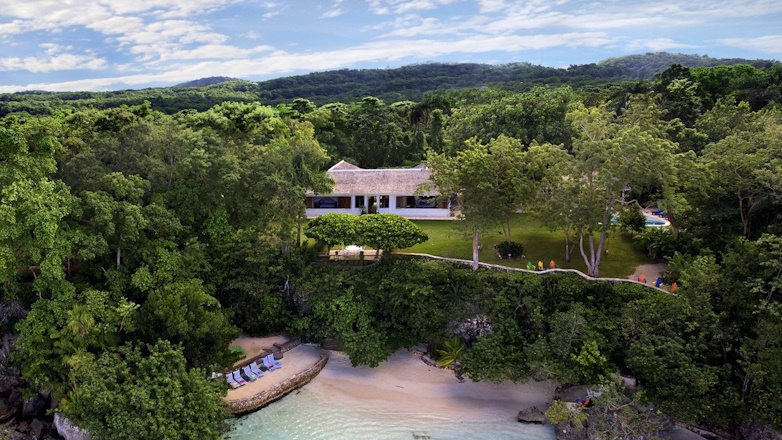
Goldeneye, also known as the Fleming Villa, on Jamaica. Copyright © 2026 The Island Outpost. All rights reserved.
Even in the darker moments of the books, the environments are used to reflect Bond's inner state, or the threat he faces. A stormy sea off Japan, or the oppressive heat of an American city, were never random choices. Fleming used climate and geography to build suspense long before the first shot was fired. This literary technique laid the foundation for how the films would later scout their locations, with each new location having to live up to the high standards set in the pages of the books.
The film series’ visual evolution of the global lifestyle
When the books were translated into films, producers Albert R. Broccoli and Harry Saltzman decided to maximize the visual potential of Fleming’s world. From the sunny beaches of Dr. No (1962) to the snow-capped Alps of later films, scouting locations became a key part of pre-production. Over time, budgets have grown, allowing the production team to not only visit these locations but to entirely absorb them for spectacular stunt sequences. This has cemented the image of Bond as a global icon who moves freely across borders.
The audience's appreciation for these grandiose environments is evident in the statistics, especially in the Nordic countries where interest in the franchise is enormous. It is worth noting that No Time To Die (2021) is the most successful James Bond film in Sweden of all time [in terms of revenue], which proves that the classic formula of international environments still attracts large audiences to cinemas. The film, which took us from Italy to Norway and on to the Faroe Islands, shows how the variation in landscapes contributes to the epic feeling that is unique to the series.
Even films such as Skyfall (2012), which was partly set in a grey and rainy Britain, used the contrast with exotic locations such as Macau and Istanbul to create dynamics. Historical data shows that Skyfall generated record revenues at cinemas in its year of release, which underlines how important the visual experience is for Swedish audiences. It is about delivering a cinema experience that feels larger than life, where each new scene transition promises a new adventure in a new part of the world.
Gambling tables and nightclubs as important dramaturgical tools
One of the most recurring environments in the Bond universe is the exclusive nightclub or gambling hall. These places fulfil an important dramaturgical function as they force a confrontation between the hero and the villain under civilized forms. Here they cannot hide behind weapons or henchmen in the same way; instead, it is about psychological games, looks and dialogue. The dress code, often a tuxedo or evening gown, raises the stakes and creates a visual symmetry between the forces of good and evil.
In these settings, Bond's ability to remain calm under pressure is tested, a quality that is as important as his physical strength. It is often here, over a drink or a gaming table, that the central conflict is first presented. The atmosphere is charged with a quiet tension, with the murmur of other guests and the clink of glasses creating a backdrop against which the real drama unfolds. It is a world of unwritten rules and etiquette, and Bond's ability to navigate this world flawlessly is what defines him as a gentleman agent.
The lighting and set design in these scenes are often among the most lavish in the films. From the gold-shimmering salons of GoldenEye (1995) to the modern, neon-lit bars of the Daniel Craig era, the architecture is used to reflect the zeitgeist. They are places of seduction and danger, where glamour acts as a cover for the deadly intrigues that lie beneath the surface. For the audience, these scenes offer a glimpse into a closed world, a fantasy of the ultimate nightlife where every encounter can be crucial.
The enduring allure of James Bond’s exclusive world
Even though it’s 2026 and the world has become more accessible through digitalisation, the allure of the James Bond lifestyle has not waned. Rather, the need for this kind of grand entertainment seems to have increased. In an age where so much is consumed on small screens, the Bond films offer a reason to head to the big screens to experience the environments in full scale. There is a timeless quality to the concept of travelling, discovering and enjoying the best the world has to offer, which the Bond brand manages well.
The market for this type of cinematic experience remains strong across the continent. Reports indicate that the European cinema market continues to show strong demand for major franchise films which offers this type of visual spectacle.
Copyright © 2026 From Sweden with Love. All rights reserved.
Tags:
#articles
#james_bond_lifestyle
#on_the_tracks_of_007
Tweet